Insights
Publications
Every Audirium article, template and product story on internal audit, risk management and compliance.
Insights
Every Audirium article, template and product story on internal audit, risk management and compliance.
Most of the EU AI Act has applied since 2 August 2026, while the high-risk requirements moved to December 2027 and August 2028. What the Act requires, which dates apply, and five questions internal audit can already test, with the evidence and the red flag for each.
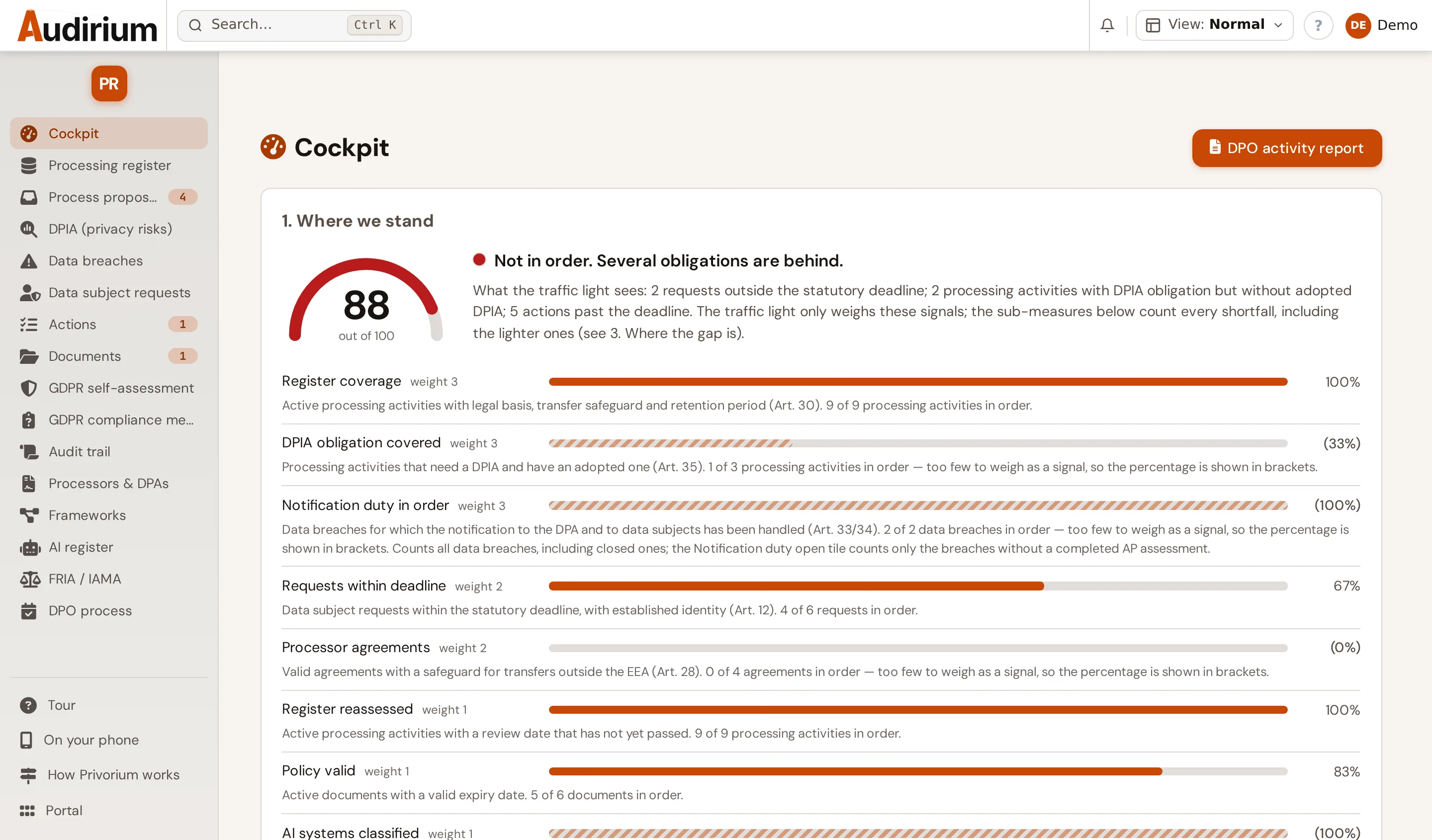
A processing register ages from the day it is finished, the DPIA circulates as a Word document and the data breach arrives on Friday afternoon. Privorium puts the GDPR registers in one file in which they reference each other, brings in process owners and employees through a personal link, and measures whether the rules are actually followed.
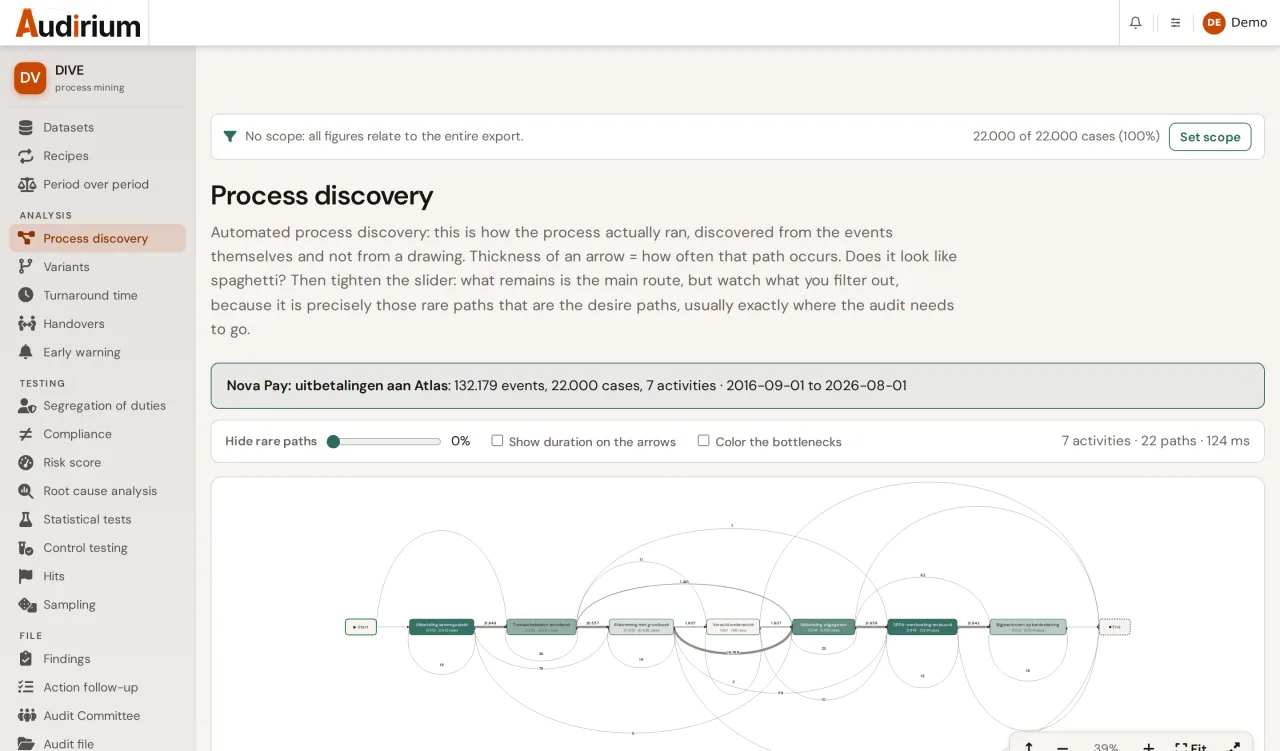
A sample of twenty five items tells you something about those twenty five items, while the source system has already recorded for every case who did what and when. DIVE reconstructs from that how the process actually ran, tests the full population with 26 kinds of control test and records the population, the coverage and the frozen definition for every test run.
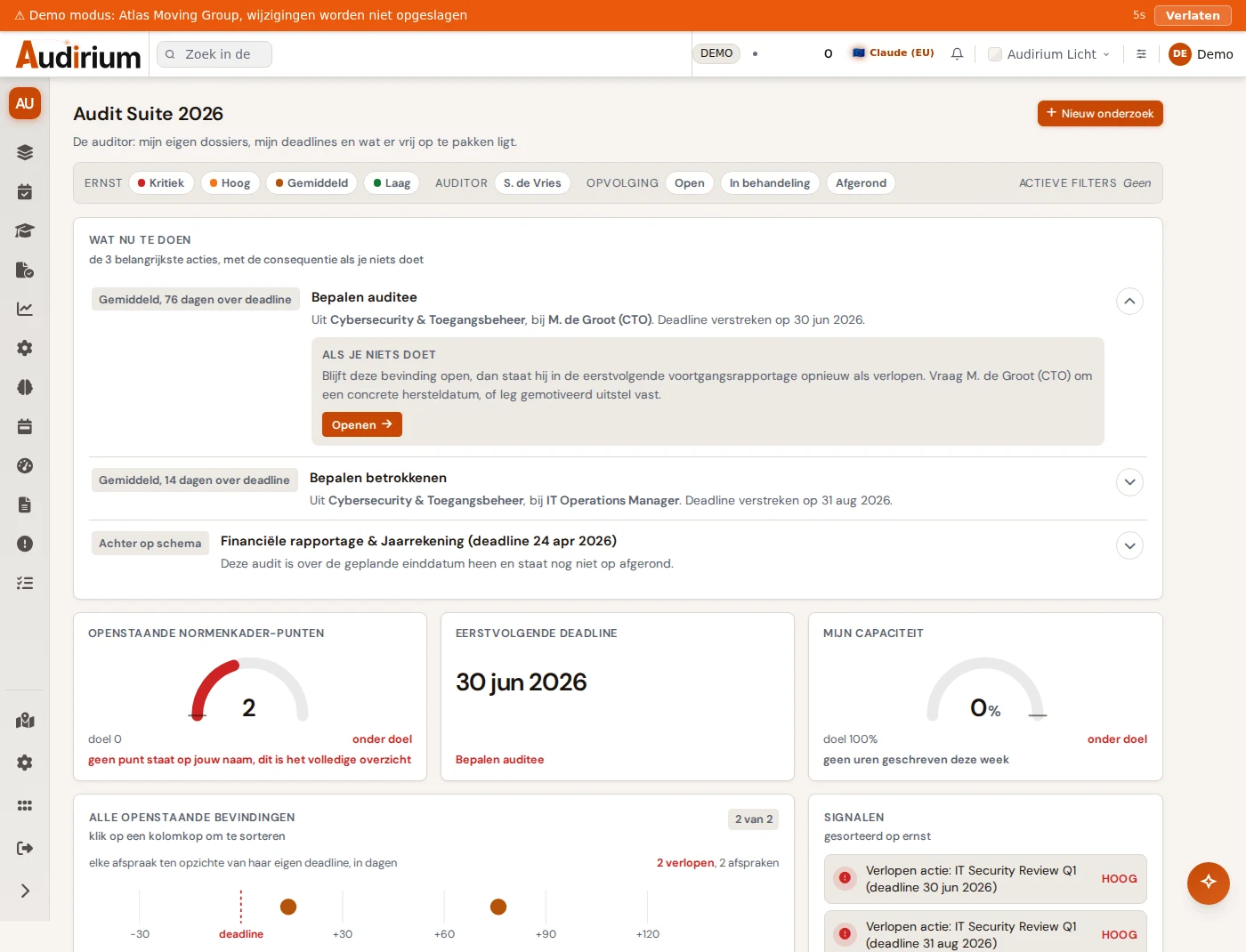
The audit universe in a spreadsheet, the annual plan in another file, reviews by email and the reporting assembled by hand. AUDIT puts the entire audit cycle in one environment: from universe to follow-up, with findings that flow straight through to action.
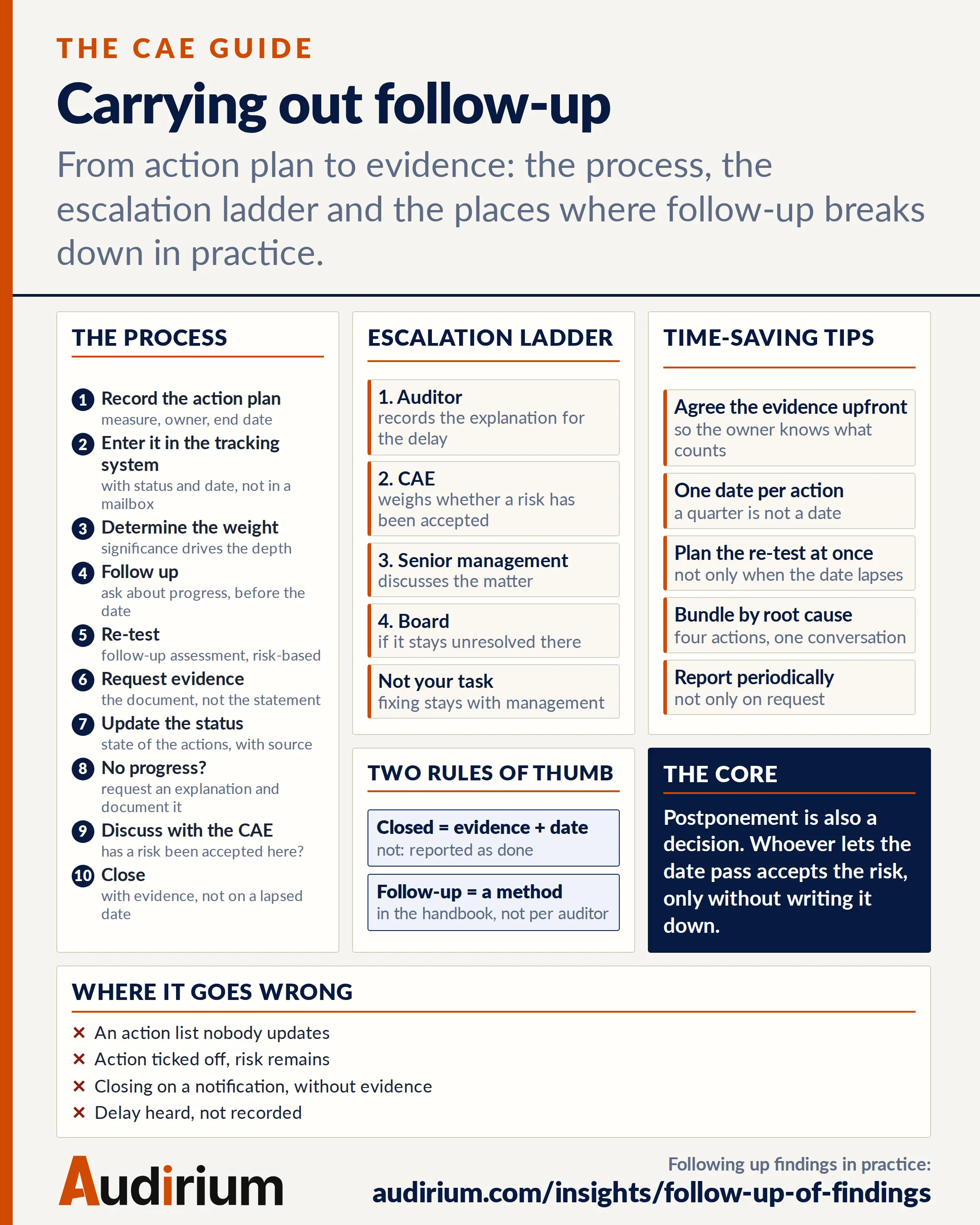
A finding is only closed with evidence that the corrective action has been implemented, not with a statement that it has been arranged. The follow-up process, the escalation ladder and the tracking system, with practical tips.

Integrating risk management and audit sounds logical. But anyone who fails to think through the implications is quietly eroding the independence of assurance.
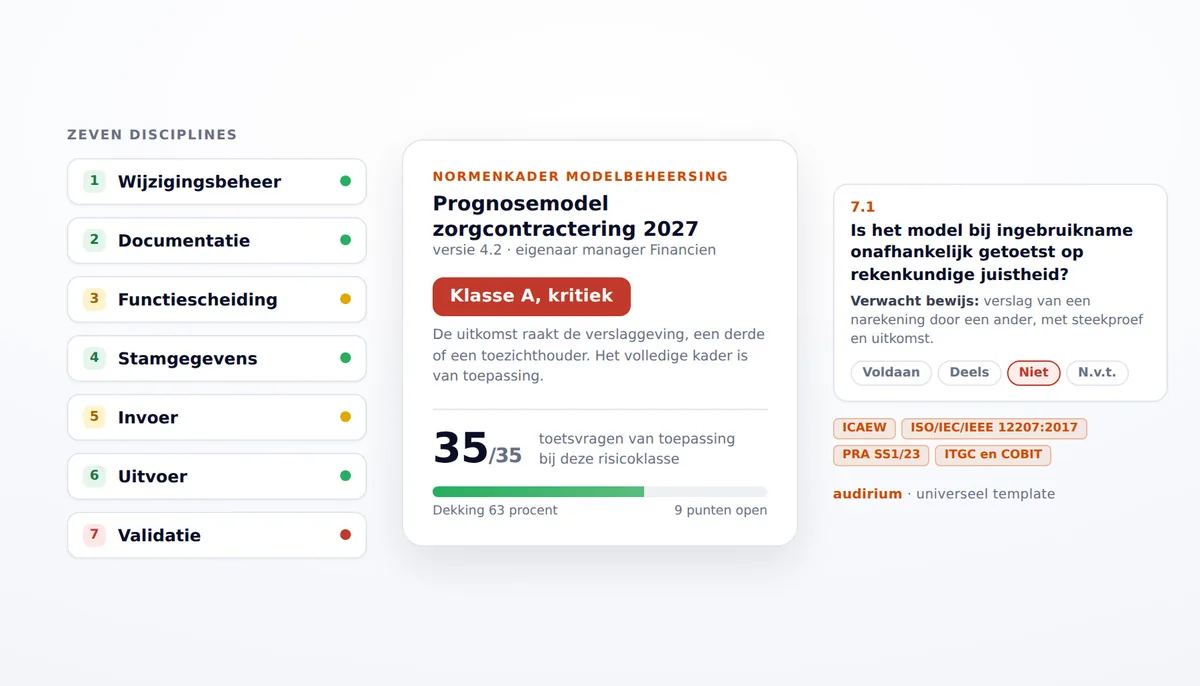
Test every calculation model or EUC file against the seven disciplines you already apply to any information system. With a risk classification that sets the weight, 35 test questions with expected evidence, and the cross-reference to the frameworks that already govern it.
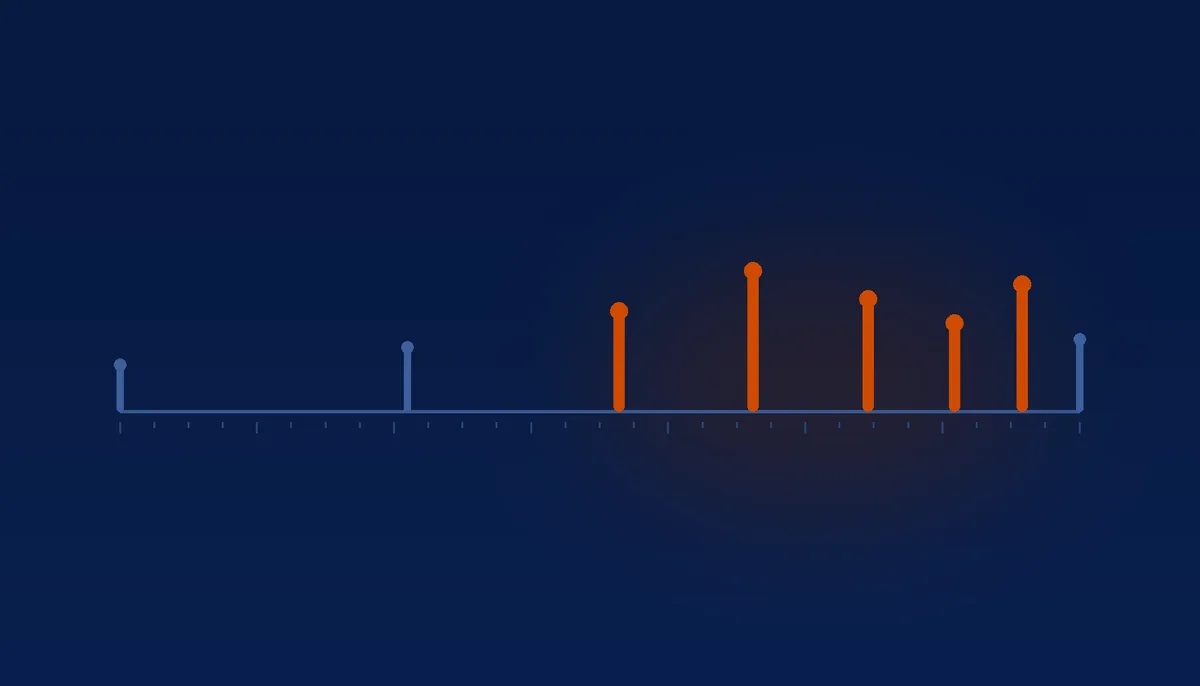
Between August 2, 2026 and January 1, 2027, seven digital rules take effect or become enforceable: AI transparency, the Cybersecurity Act, the reporting duty from the Cyber Resilience Act, two new AI prohibitions, the new product liability regime, the EUDI Wallet, and the new Archives Act. Each date carries a label for whether it affects you.

The structure of an audit report, the finding and the conclusion. A practical guide grounded in the Global Internal Audit Standards.

How often must an external quality assessment take place, what counts as an internal assessment, and who is allowed to perform it? The requirements from the Global Internal Audit Standards, explained and made practical.
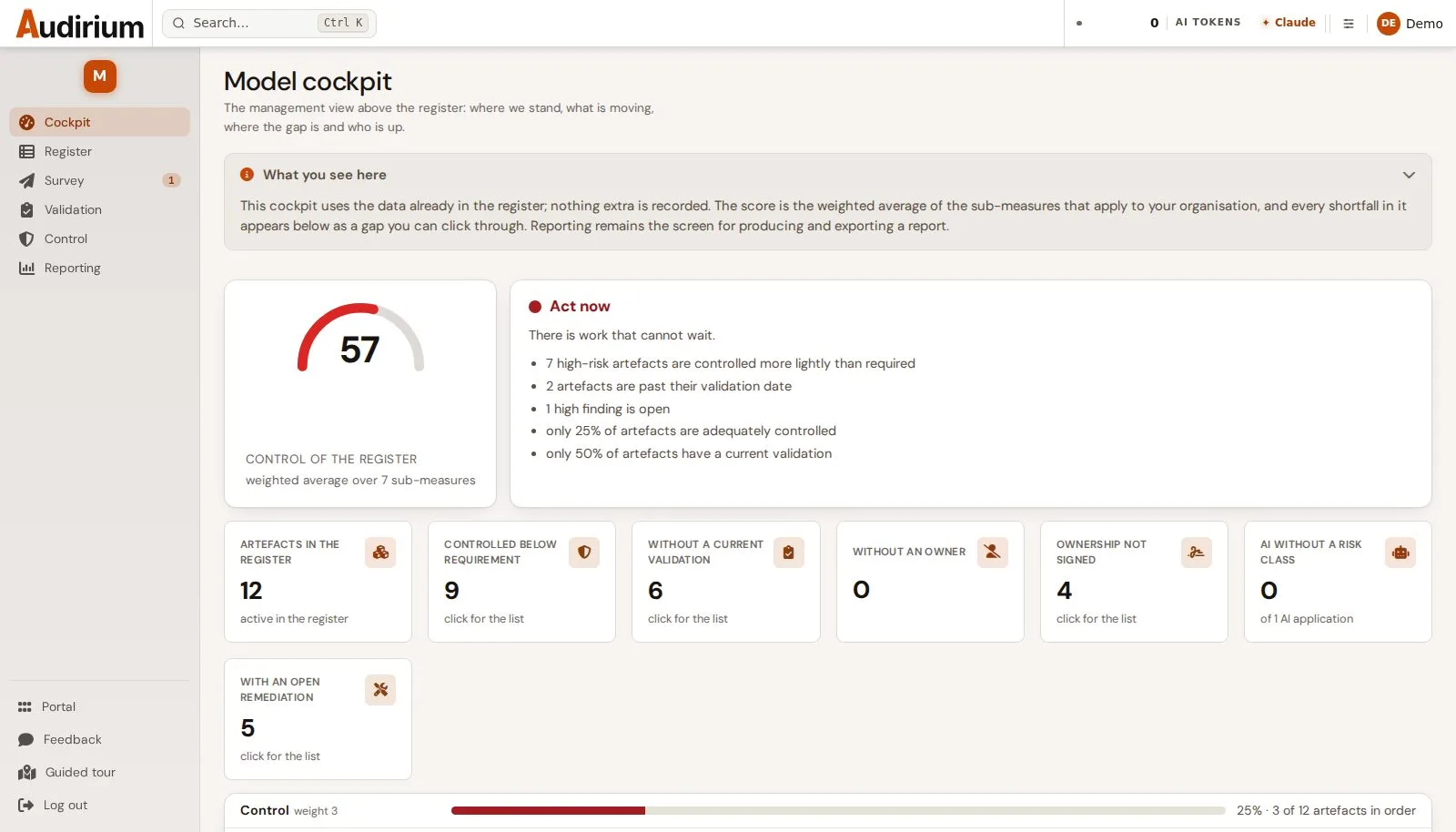
The spreadsheet that feeds your risk calculation is a model, but it is rarely treated as one. On the blind spot in model risk management, what it costs and how to close it.

The GIAS expects foresight from internal audit and the IIA Netherlands Practice Guide elaborates it. A prediction can only be validated after the fact, so this piece makes foresight testable: assess the capability, not the outcome.

An audit plan is a risk decision in two parts: what you audit, and what you deliberately leave uncovered. Why that second part is a board decision.
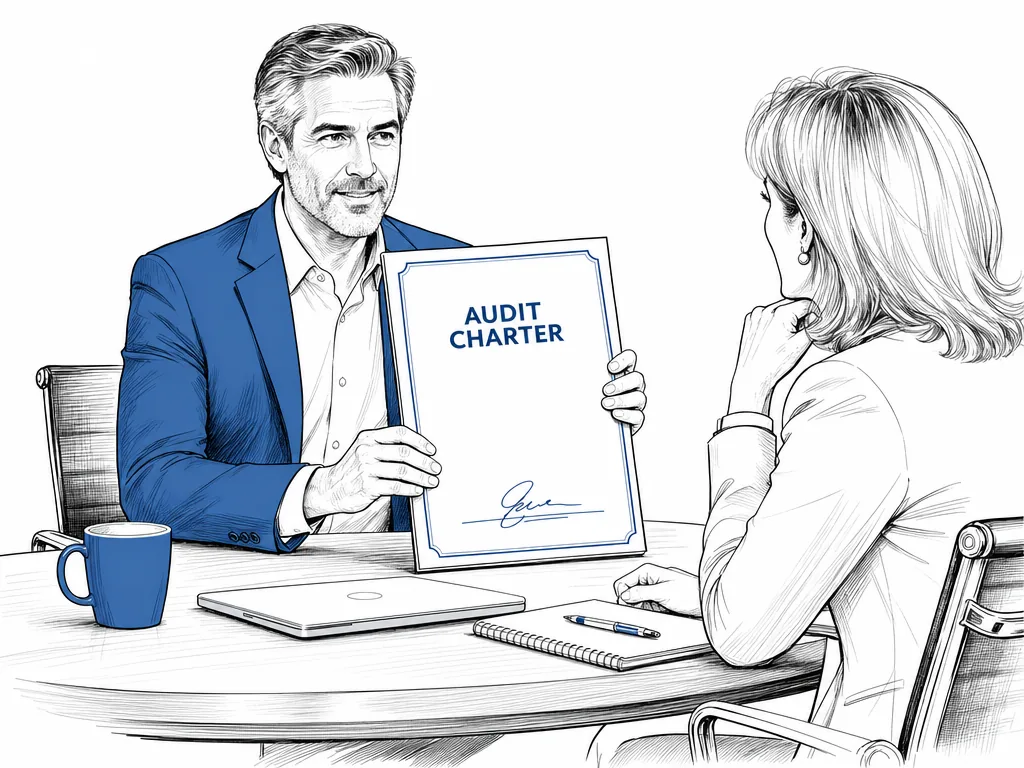
Internal audit charter template based on the GIAS: fill in your organisation details and export a complete charter with a GIAS cross-reference table. Includes governance model selection and live input fields.
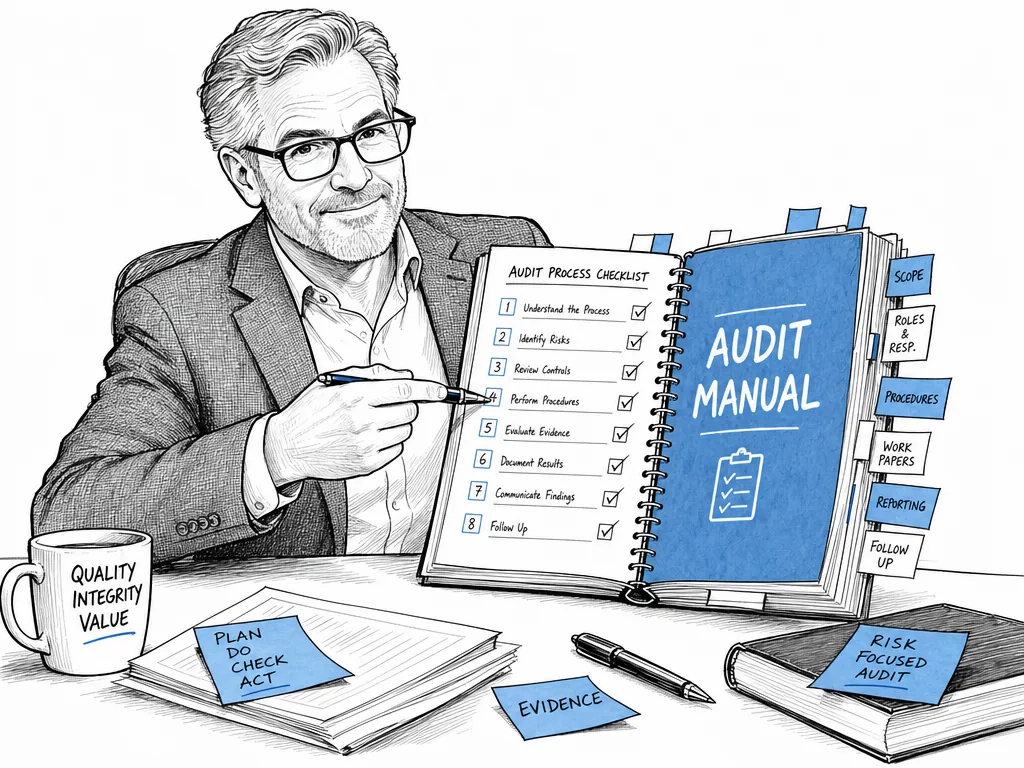
An operational audit manual as a fill-in template, using the GIAS as its reference framework, covering strategy through follow-up, with phase-specific checklists and a GIAS cross-reference table.
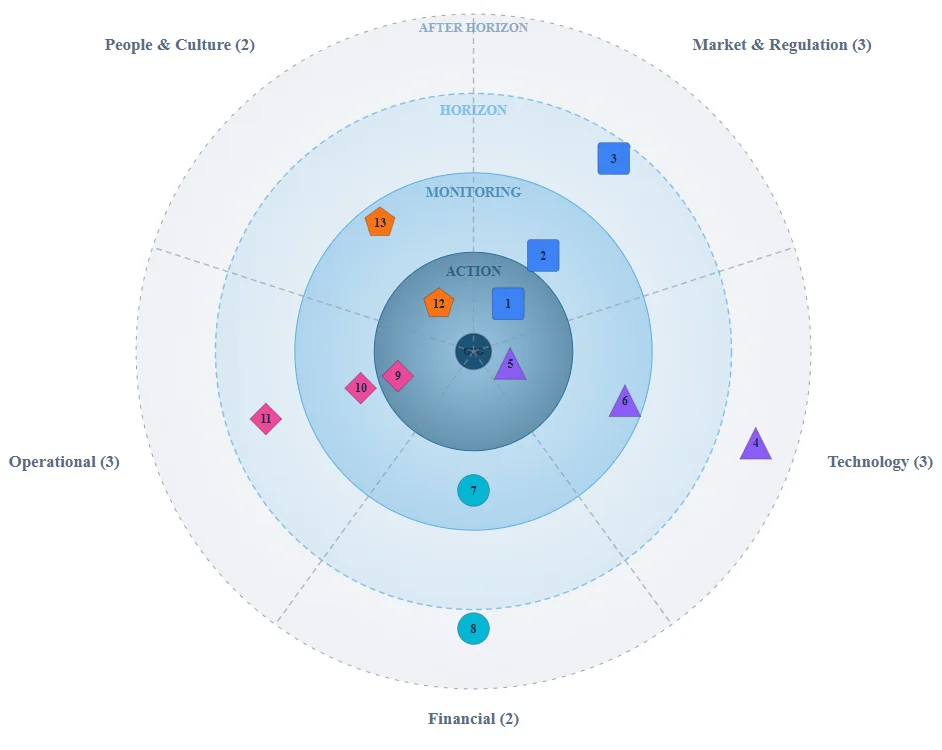
Many organisations claim to have strategic risk management in place. In practice, that often means someone spent a great deal of time producing a polished PowerPoint presentation.

Everyone in audit talks about Agile. Few actually do anything with it. Five lessons from those who did.

"I'm busy" is the Swiss Army knife of organisations. You can use it for anything: postponing, cutting conversations short, staying polite. But is it actually honest?

The Global Internal Audit Standards were written with large audit departments in mind, but they also apply to a function of one to five people. This is how you meet them without the size of a large department.

The interview is to audit what "busy" is to the rest of the organisation: everyone does it, no one questions it; and when you ask why, the answer doesn't hold up.

As an auditor, do you give advice; or stick to the facts? There are good reasons for both, and less good ones. An honest overview.

According to the Standish Group CHAOS Report 2020, only 31% of the projects studied were completed within time, budget and scope. Internal Audit can help to improve the likelihood of success, provided it has a seat at the table early enough.